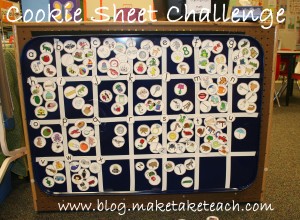
Ohhhh…. The Things You Can Do With an Oil Drip Pan

You have to hand it to teachers– they are SO creative!  Who would ever think an auto oil drip pan would make such an awesome center activity.  If you are joining me on my “Cookie Sheet Challenge” I know what you’re thinking.  An oil drip pan is “technically” not a cookie sheet.  I have tons of paint left in that spray can and I’m desperate.   Just think of it as a really big cookie sheet!  To make this activity, I painted my oil drip pan with navy blue metal paint.  Since I wanted to use the pan for letter/sounds, I used white electrical tape to make the squares.  I then mounted the drip pan  (aka really big cookie sheet) by running
[Read More...]

Four Ways to Build Reading Fluency

I’m on spring break now and before leaving had to decide which book to pack for reading on the beach.  I came oh so close to purchasing the Hunger Games, but grabbed Timothy Rasinski’s book The Fluent Reader from our loaning library at work instead  (sad, I know).    I’ve read the book before and remember thinking it was filled with great strategies for improving reading fluency.  What I didn’t remember, however, was that the first chapter was devoted to an interesting account of the history of oral reading and silent reading in American education as well as pointing out the drawbacks of current practices such as round robin reading.   Here’s a snip-it of what I’ve read: It hasn’t been until

[Read More...]

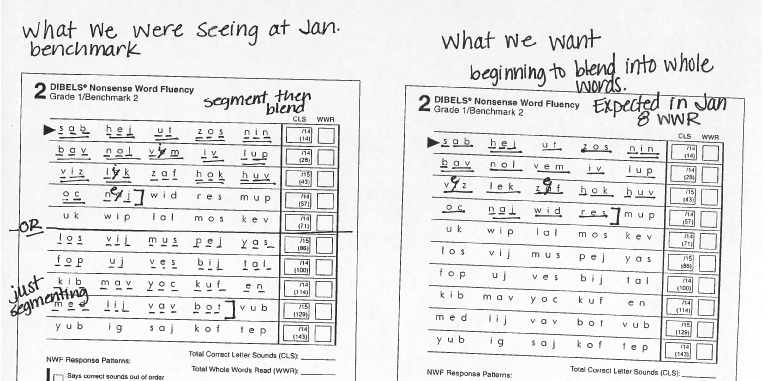
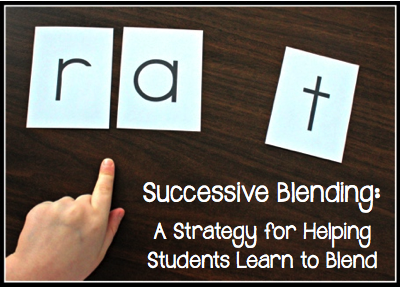
Helping Students Move to Blending Consonant-Vowel-Consonant Words

Our seven school districts changed from using the DIBELS 6th Edition to the DIBELS Next this school year.  Following each benchmark assessment we were just a little bit nervous (actually, really nervous) as to what our data would look like.  Would any changes we see be a result of the change in the assessment or as a result of a change in instruction?  When comparing our data using the DIBELS Next to our past assessment trends, one of the most striking differences came at the winter benchmark assessment for first grade.  Although we maintained the percentage of students performing at benchmark, we now had many more falling within the intensive range.  Yikes!  After analyzing all the data, our school teams felt that the new requirement

[Read More...]

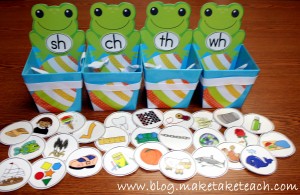
A Springtime Activity for Sorting Consonant Digraphs

I’ve been feeling like I’ve been neglecting my first and second grade teaching friends lately by posting bunches of early reading activities.   When I purchased those cute little flower boxes at Walmart for the Springtime Vowel Sorting, I couldn’t help but pick up a few of those adorable frogs.  I wasn’t sure what I was going to do with them at the time.  So, thinking about what I can make for first grade, I came up with a consonant digraph sorting activity. Click HERE to download the free consonant digraphs pictures. Click the following link to download directions for differentiating this activity. Differentiating the Frog Consonant Digraph Sorting Activity      

[Read More...]

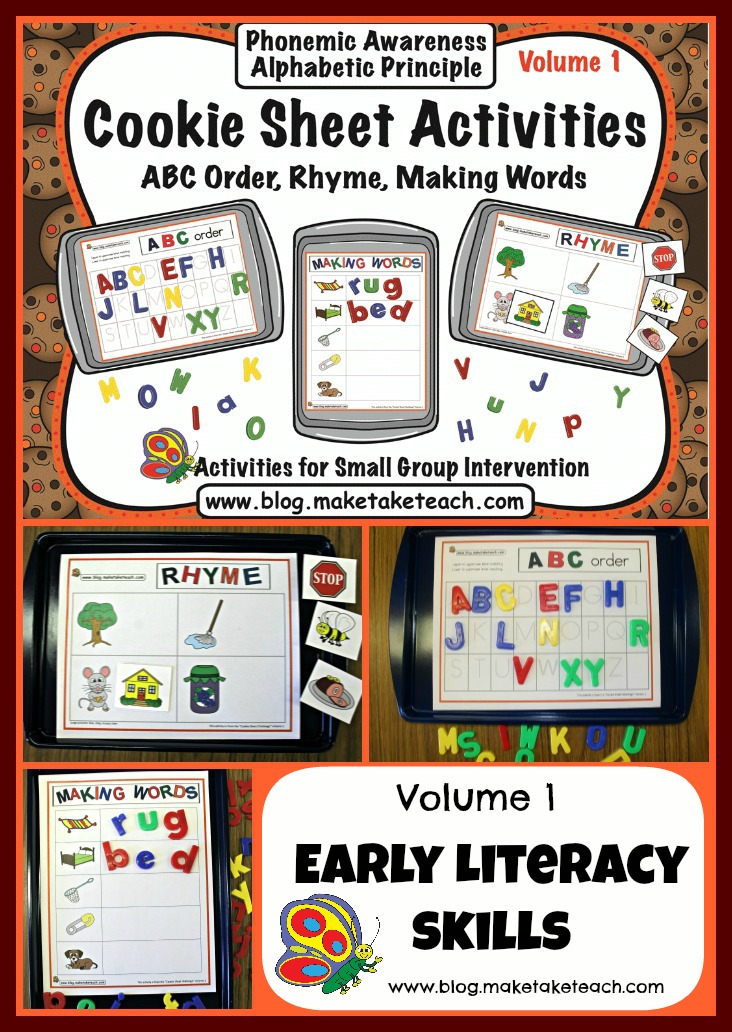
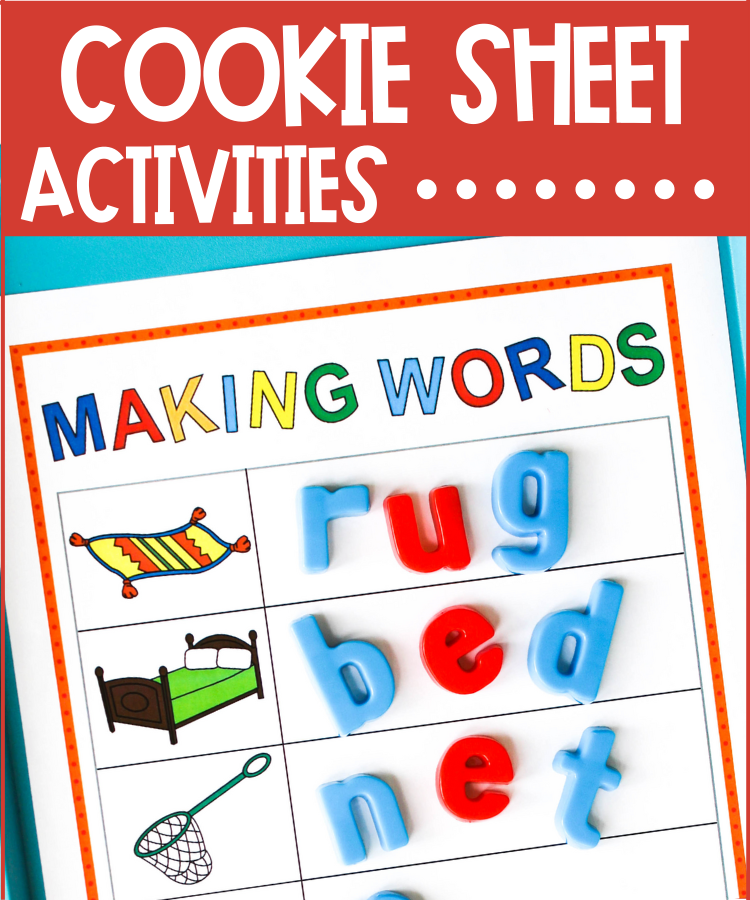
The Cookie Sheet Challenge!

It all started with a cookie sheet.  I was observing a student in a kindergarten classroom during literacy center time and in one of the centers the teacher placed magnetic letters on a cookie sheet and the students made words with the letters.  Clever– I’ve seen cookie sheets on Pinterest before and really hadn’t paid much attention.  After leaving the classroom I wondered how many activities can I come up with using a simple cookie sheet.  So my weekend started with a trip to our Habitat for Humanity Restore- hum, no cookie sheets.  No luck at Goodwill and no luck at the Salvation Army.  Couldn’t believe it.  So I traveled over to Walmart and they had cookie sheets for only 88 cents! 

[Read More...]

Vinyl Chalkboard Sheets- Such Endless Possibilities!

I thought I was excited when the Home Depot started selling chalkboard paint.  Then came the dry erase board paint…  oh, my gosh!!  But today my teacher friend, Keri, shared a new product that will likely keep me up many nights thinking of different ways to use it.  It’s vinyl chalkboard paper!  Can you believe it?  It works just like contact paper.  You cut it into the size or shape you want, adhere it to any surface, write on it with liquid chalk, and then erase it with water.  Amazing! Keri cut strips of chalkboard sheets and used it to label containers in her classroom.  She also used the sheets for a math station activity.  Next year the kindergarten teachers at the school plan to use a Cricut machine to cut the sheet into shapes for

[Read More...]

Response to Intervention: A Lesson From Our Orthodontist

  My three children are now 18, 17 and 15.  When Response to Intervention (RtI) was first introduced in our districts around 8 years ago, I was spending just about the same amount of time in the Orthodontist’s office as I was on the soccer fields.  As our family Orthodontist explained, there was something about my husband’s and my genetic combination that contributed to our children’s very unique orthodontic problems.  My son’s issues were mild compared to my two daughters.  What was astounding to our Orthodontist was that Kassie and Lizzie had the opposite problem.  Kassie had a severe overbite and Lizzie had a severe underbite (among many other issues).  He informed us that out of the three very difficult

[Read More...]

Teaching Students to Space Between Words

One of the great benefits of my job is that I have the privilege of working with many skilled professionals from various disciplines.  We have a dynamite staff of Occupational Therapists who are never short of ideas and suggestions.  I recently had a discussion with one of our OTs, Lyzz, regarding letter reversals and handwriting in general.  Lyzz said that if students space between words and use correct letter size differentiation (using tall, short and below the line letters) that despite spelling errors, you can typically read and understand what was written.  Although there are several strategies that can be used to teach and remind students to space between words, Lyzz’s preferred method is the one which includes using small stickers.  She likes

[Read More...]

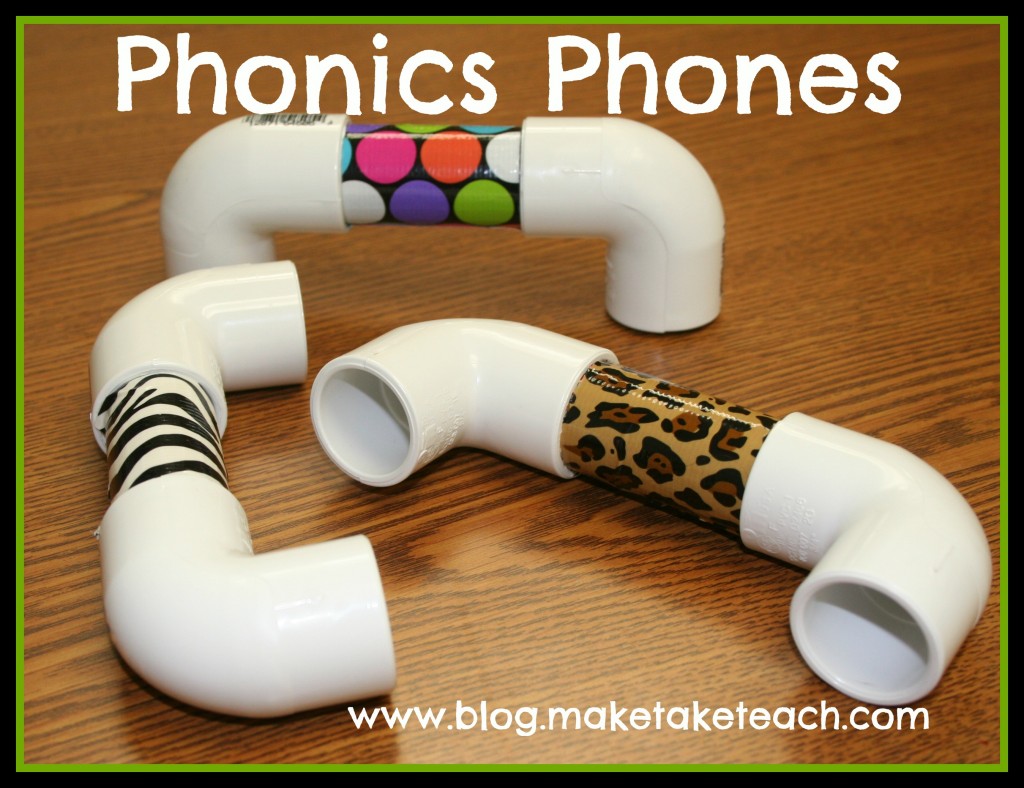
How To Make A Phonics Phone

Phonics phones and mirrors are two of the most important items in an early elementary small group instructional area.  Phonics phones amplify the student’s voice helping the student to focus and pay attention to the sounds.  Although you can purchase phonics phones, they are quite easy and inexpensive to make.  View the video for instructions on how to make your own classroom phonics phones. To make phonics phones Purchase a 3/4″ PVC pipe and 3/4″ elbow joints (you will need 2 for each phone) Cut PVC pipe into 3 1/2 inch sections Put an elbow joint on each end of the pipe Colorful duct tape can be wrapped around the center of the pipe for fun. Use phonics phones… 1.

[Read More...]

Teaching Short Vowel Sounds: Perfect Practice Makes Perfect!

Last summer I read Malcolm Gladwell’s book The Outliers.  I haven’t read a good non-teaching type book in a long time.  Although I call it a “non-teaching” type book, the ideas presented in the book shaped my thoughts of teaching and learning more than any other book I’ve read.  The concept behind the book was to look at lives of extraodinarily successful people and the circumstances and conditions which lead to their success.   There are many ingredients that lead to success, but the one concept that stood out as I read the book was that of the 10,000 hour rule.  Gladwell said that in order to truly master a skill, whether it’s in athletics, music or a skill such as computer programming,

[Read More...]

Follow Us

Popular Posts