Short Vowels Cue Cards

Some of our little readers are still having trouble confusing those short vowel sounds.  We certainly see this in their written work.  I’m hoping these cue cards can help.  Simply print the cards, cut them out and place them on the desk or table.  They serve as a visual cue to help with correct use of the vowel when writing.    Of course, not every student will need the cue card;  just those students who are still substituting one vowel for another. Click the following link to download FREE short vowel cue strips Vowel Prompt Cards If you are working with short vowel sounds in your small group intervention, the Vowels Sticks and Vowel Snatch are two great activities for teaching these
[Read More...]

Teaching Blends and Digraphs

Seems like this week there’s been quite a few questions about blends and digraphs.  Teachers have been asking and wanting to know what the difference is between a blend and a digraph, which to teach first and the best way to teach these skills.  Well, with all these questions, that was motivation enough for me to finish this post that I started literally a year ago.  I’m hoping this post can answer some of these burning questions about teaching blends and digraphs. Question 1: What’s the difference between a blend and a digraph? Consonant Blends A consonant blend is when two or more consonants are blended together, but each sound may be heard in the blend.  The most common beginning

[Read More...]

DIY Magic e Wands

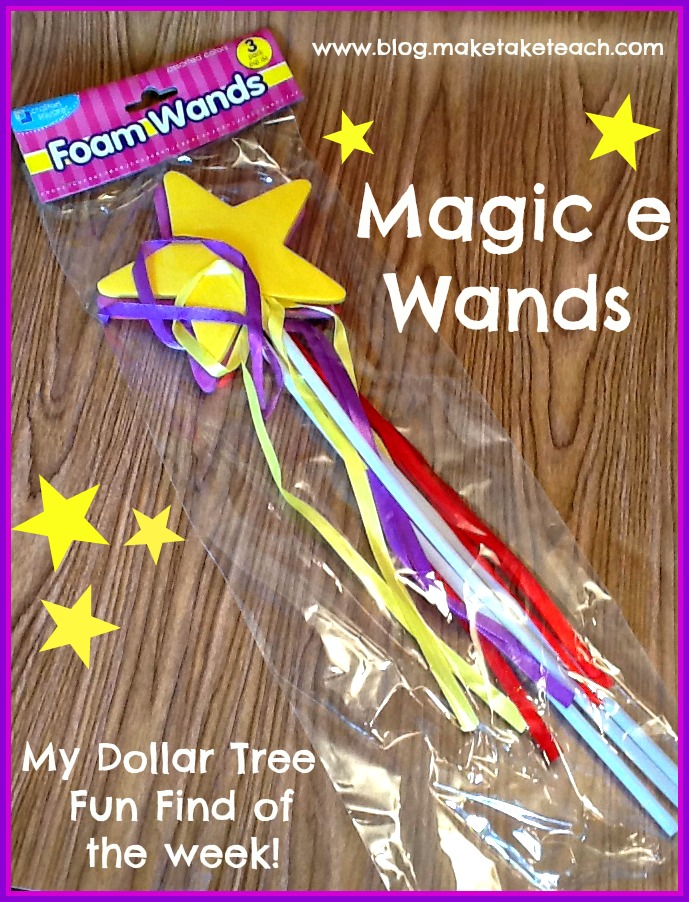
Look what I found at the Dollar Tree!  The Dollar Tree is literally a gold mine of fun stuff for creating engaging classroom activities.  I found this pack of three foam wands in the arts and crafts section and thought how easy it would be to write an “e” on the star and make them into a “magic e” activity. I created these magic e templates which can be placed on the table or floor.  You could also tape them on your white board for a super easy literacy center activity.  Students simply read the CVC word and then places their magic e at the end to change that vowel sound.  When you download the pdf you’ll received 24 CVC/CVCe cards.  Just in

[Read More...]

Using Blending Boards During Small Group Instruction

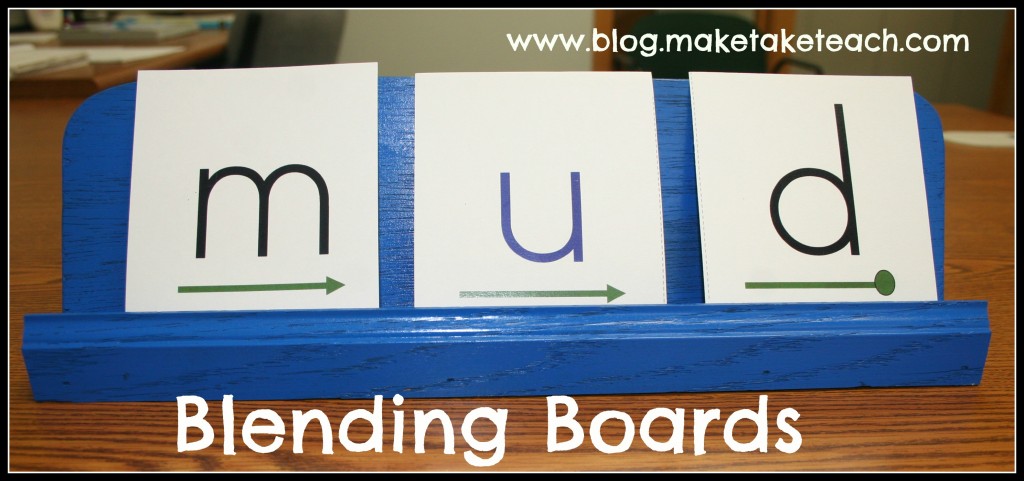
We’ve finished our DIBELS Next testing and our intervention groups are now in full swing.  Our teachers have been bringing out those blending boards that the Career Tech students made us last year (love them!) and are using them within their small group instruction.   We started using these blending boards last winter when our first grade Nonsense Word Fluency data wasn’t where we wanted it to be.  Our students were accurate with their sound-symbol relationship, but were mostly sounding out the words sound-by-sound rather than just reading the whole word.  Since posting the video on How To Use A Blending Board last April, I’ve been getting tons of emails and comments.  I decided to put all the downloads and videos in one blog post so you

[Read More...]

Fun Finds at Walmart for Your Small Group Intervention

Horray!  Back-to-school supplies are now in stores!  If you’ve been following my blog for a while, you know how I love my Walmart.  So I was thrilled to see great bargins in the school aisle at my favorite store.  Here are a few of items I found that would be great to have in your small group intervention area: 1.  Locker mirrors.  Mirrors are a must in any small group intervention area!  When teaching letters and sounds, especially for those struggling readers, having them watch the placement of their lips, tongue and teeth while making the sounds is very helpful.  These decorative mirrors are only 88 cents!  They are the perfect size. 2.  Dry Erase Boards- Dry erase boards are another

[Read More...]

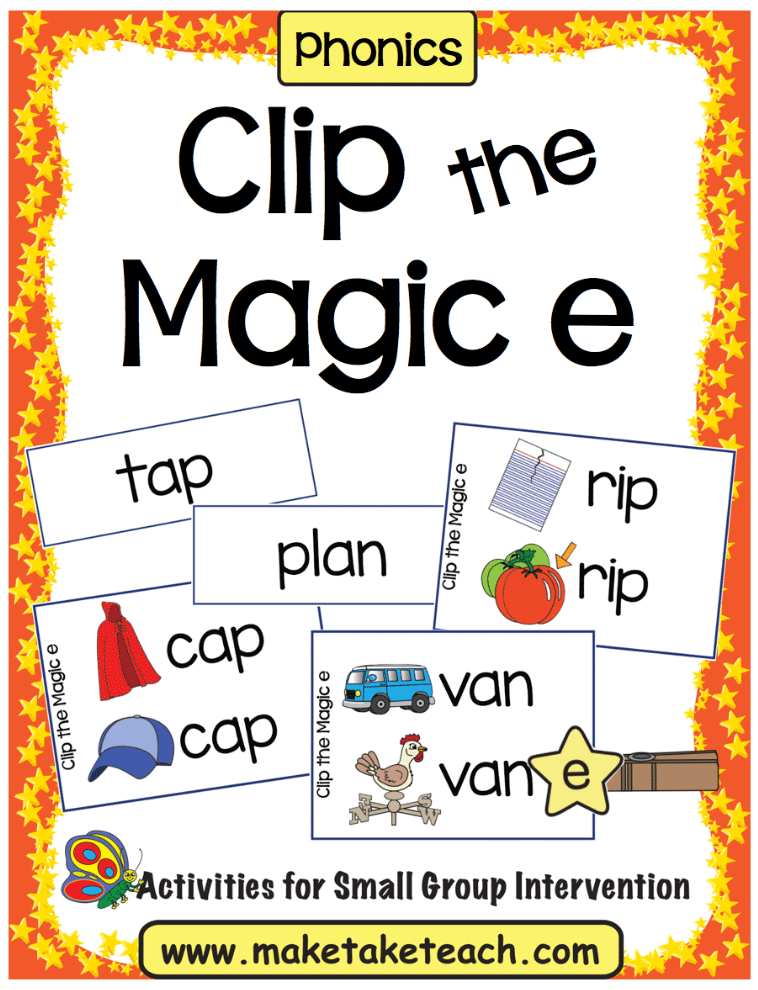
Activities for Teaching the Magic e Rule

Learning vowels can be very challenging for our young readers and writers because they make different sounds in different words.  Vowels can either make a short sound such as the /a/ sound in the word “cap” or a long sound, such as the /a/ in the word “lake”.  When reading, children must decide whether the vowel in the word makes its short or long sound.  There are several ways to make a long vowel sound in words.  One way is to add the Magic e at the end of a word.  The Magic e usually changes the short vowel sound into a long vowel sound.  Teaching children this rule helps them to determine which sound the vowel will make. A simple

[Read More...]

Phonological Awareness, Phonemic Awareness and Phonics

Several years back all the K-6 and special education teachers in our districts participated in the Language Essentials for Teachers of Language and Spelling (LETRS) training.  One of the beginning sessions introduced the the five key areas of reading instruction proposed by the National Reading Panel.  Phonemic awareness and phonics are two of these components.  During this session, there seemed to be quite a bit of confusion over the terms of “phonological awareness”, “phonemic awareness” and “phonics” and knowing the difference between those terms.   So, let me see if I can help provide clarification. Phonological Awareness- Phonological awareness is a general appreciation of how spoken language can be divided into its components.  For example, we speak in sentences.  Sentences can be broken

[Read More...]

How To Make A Phonics Phone

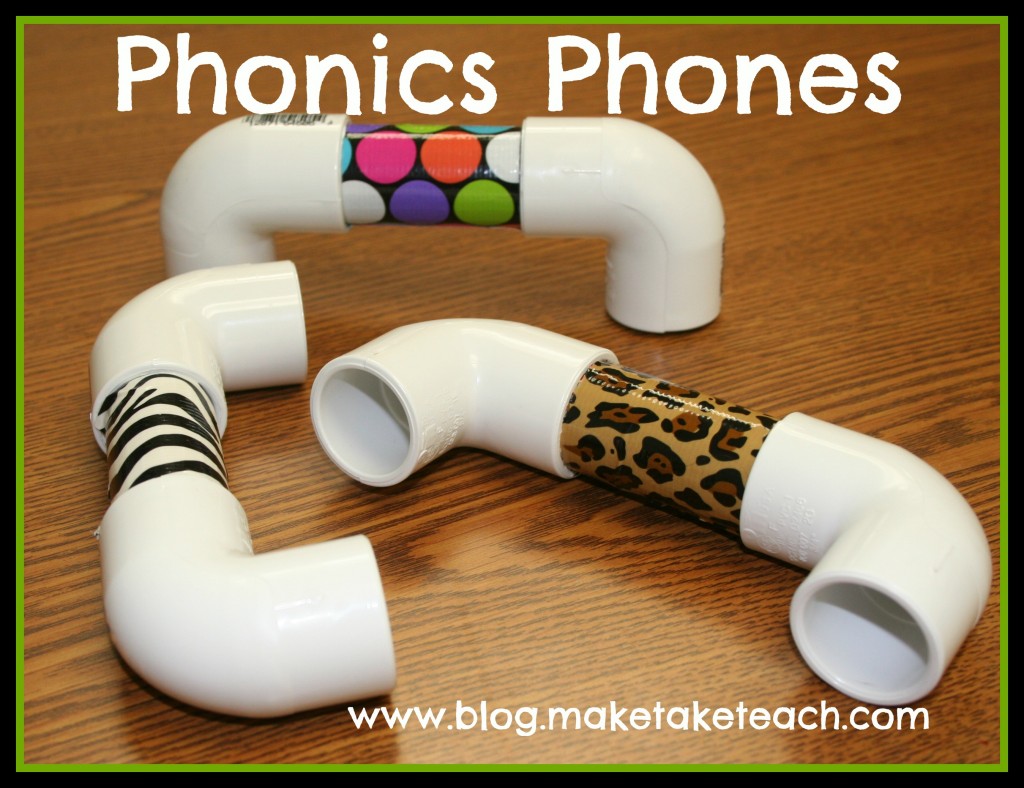
Phonics phones and mirrors are two of the most important items in an early elementary small group instructional area.  Phonics phones amplify the student’s voice helping the student to focus and pay attention to the sounds.  Although you can purchase phonics phones, they are quite easy and inexpensive to make.  View the video for instructions on how to make your own classroom phonics phones. To make phonics phones Purchase a 3/4″ PVC pipe and 3/4″ elbow joints (you will need 2 for each phone) Cut PVC pipe into 3 1/2 inch sections Put an elbow joint on each end of the pipe Colorful duct tape can be wrapped around the center of the pipe for fun. Use phonics phones… 1.

[Read More...]

Follow Us

Popular Posts