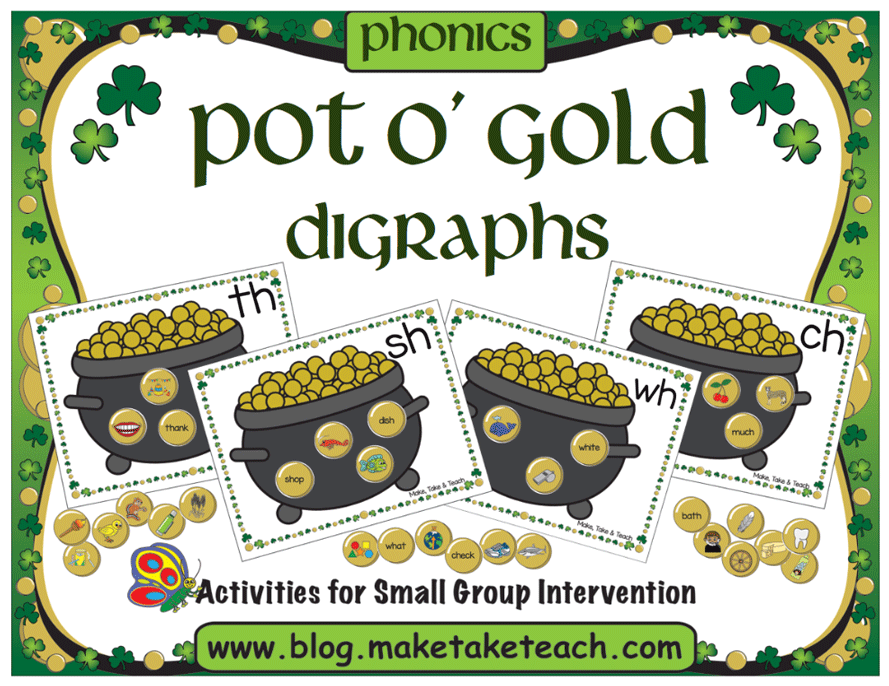
Fun Little St. Patrick’s Day Activity for Practicing Digraphs

St. Patrick’s Day is soon approaching!  My goodness, this school year is flying by.  It’s kind of fun how we measure our school year by the coming and goings of the holidays.  So far this year we’ve had 9 snow days!  Can you believe it?  9!  It seems like we’ve been hit with a deep freeze this year.  It’s not often that you read -29 degrees on your car thermometer.  That’s not even counting the wind chill.   When you live in the great white north you never know what can happen.  With winter not even over, we may have to go well into summer.   Anyway, here’s a little digraph activity I whipped up on one snow day morning. What

[Read More...]

Resources for Teaching Blends and Digraphs

Many of my first grade friends are now learning common blends and digraphs.  I thought it’d help if I gathered a few of my favorite resources and activities as well as answer common questions for introducing and practicing this skill. What’s the difference between a blend and a digraph? Consonant Blends A consonant blend is when two or more consonants are blended together, but each sound may be heard in the blend.  The most common beginning consonant blends include: bl, br, cl, cr, dr, fr, tr, fl, gl, gr, pl, pr, sl, sm, sp and st.  Blends can also occur at the end of words as in the word “last”.  There are also blends which contain three consonants.  Common three

[Read More...]

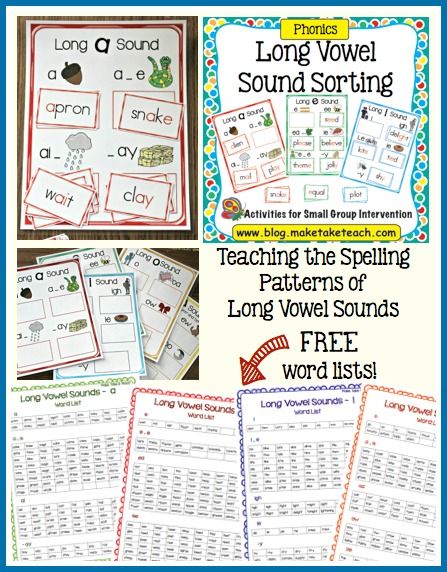
Teaching Long Vowel Spelling Patterns

Long vowel sound spelling patterns are quite difficult for students to learn.  First they must understand that more than one letter can be used to represent one sound and then learn the various ways that the sound can be represented in print.  For example, there are 4 common ways the sound /a/ can be spelled: “a” as in “acorn”, “a_e”  as in “gate”, “ai” as in “rain” and “ay” as in “day”.  Students must also learn when to use the spelling pattern for each sound.  For example, the “ay” spelling pattern for the /a/ sound most often occurs at the end of words while the “ai” spelling pattern never occurs at the beginning or end of words.  Whoa! kind of

[Read More...]

A Sweet Little Freebie for Learning CVC Words!

Here’s a fun little freebie for practicing consonant-vowel-consonant words.  Just print out the cupcakes and have your students see how many CVC words they can make with the onset and rime.   This activity can be used in your literacy centers or as an activity for small group instruction. To download the cupcakes and the recording sheet, simply click the link below! The Cupcake Matching activity for CVC Words is available in my online Teachers Pay Teachers store.  

[Read More...]

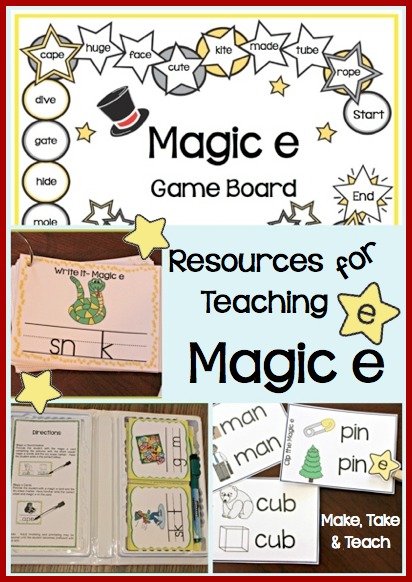
Resources for Teaching the Magic e Rule

Shortly after students are solid with their sound-symbol relationships we begin to teach specific phonics rules.  The Magic e rule is one of the first rules introduced to students.  Students must learn that vowels actually have two sounds- a long sound and a short sound.  When reading, students must decide if the vowel in the word makes a short or long sound.  One way a vowel makes a long sound is when an “e” appears at the end of a word.  An “e” close behind another vowel (with no more than one letter in between) usually makes the first vowel say its name, and the “e” is usually silent.  So the vowel sound in the word “cap” is short; the vowel

[Read More...]

Winter Themed R-Controlled Vowels Activity

Gotta say- it’s all about winter.  We absolutely LOVE winter and it’s so much fun celebrating this season with winter-themed activities.  We created these phonics-based  activities for centers and small group instruction just for the blustery months of December, January and February.  The Winter Themed Activities for R-Controlled Vowels contains 5 interactive activities for practicing this phonics skill.  The activities within this bundle include a sorting activity (60 colorful penguins) , Lotto, multiple 4-In-A-Row game boards, the I Have Who Has card game and 175 word cards to practice reading r-controlled vowels within words.  The Make, Take & Teach Winter-Themed Activities for R-Controlled Vowels is available through my online Teachers Pay Teachers store. Of course, we didn’t stop with just r-controlled vowels.

[Read More...]

Short Vowel Sounds Snowball Sorting Activity

Those short vowel sounds can be tricky.  It’s so important that our young readers have a good handle on vowels.  The best place to start with kiddos who are confusing the sounds is with discrimination activities.  These types of activities help our students to first hear the differences between the vowel sounds.  The first step is to find out which vowel sounds the student is confusing.  An easy way to do this is to take a look at the student’s writing.  The Make, Take & Teach Sorting Snowballs activities have several differentiated templates with varying number of vowels and different vowels combinations. Students sort either the picture or the word according to the vowel.  There are 60 colorful short vowel

[Read More...]

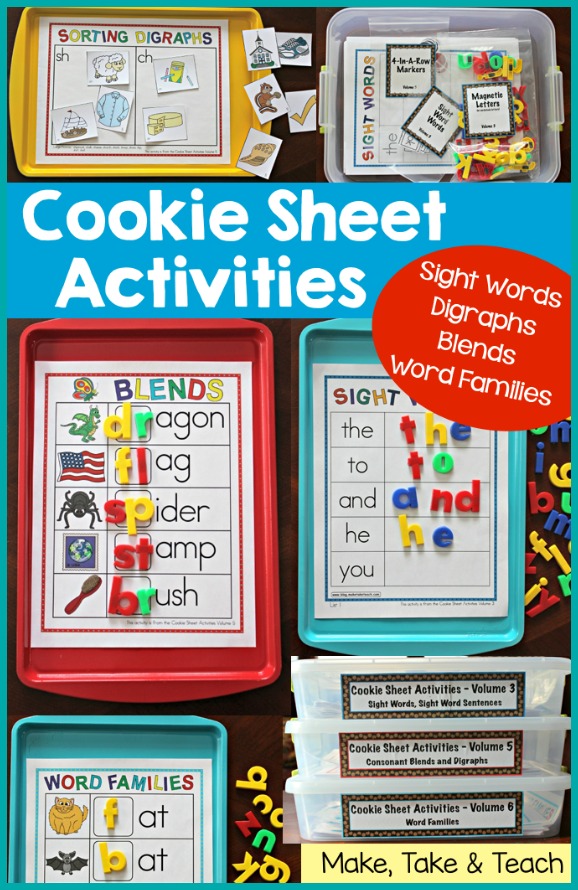
Cookie Sheet Bundle for Sight Words, Blends/Digraphs and Word Families!

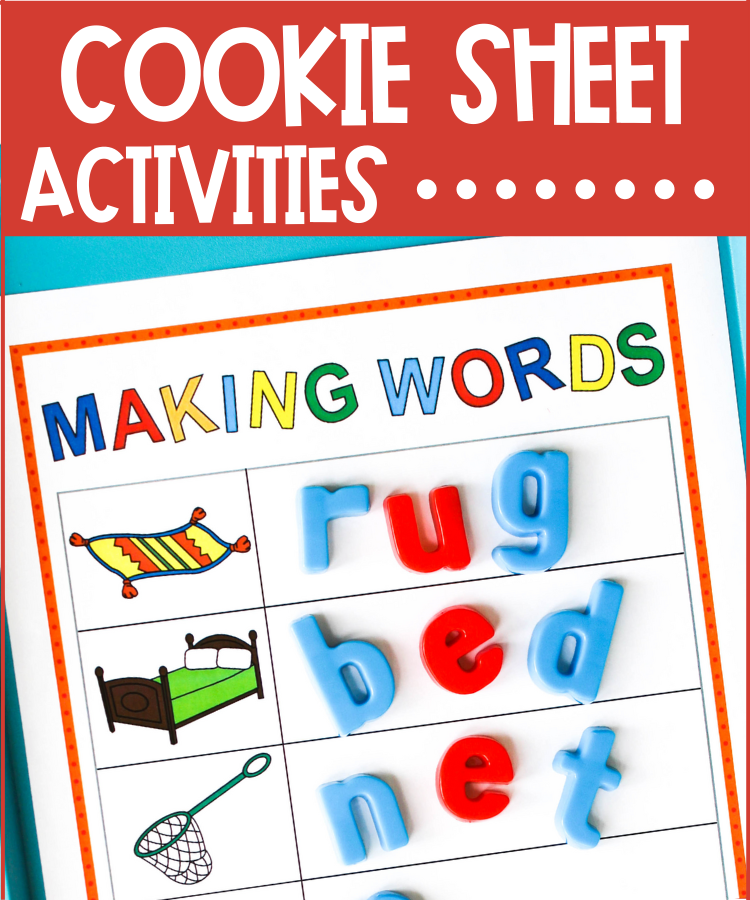
The Cookie Sheet Activities have certainly been popular with my kindergarten and first grade teacher friends.  They are so versatile- they can be used within small group instruction or as independent literacy center activities.  It’s always so important to incorporate hands-on learning especially for our young and struggling readers and these activities do the trick.  Our  Cookie Sheet Activities for Pre K – K Bundle incorporates the skills of ABC order, rhyme, beginning sounds and early numeracy.  The first grade bundle contains a little more advanced skills.  The first activities within this bundle focus on learning and practicing sight words.  The first sight word activity requires your students to build the words with magnetic letters.  There are 43 templates in

[Read More...]

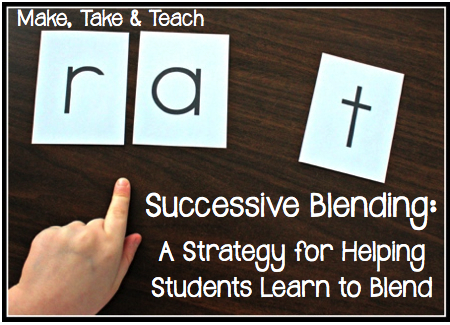
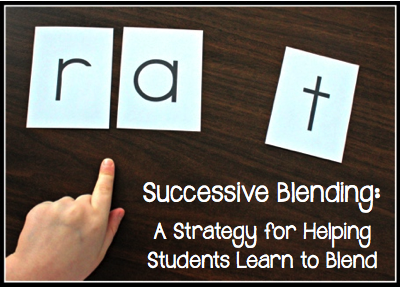
A Strategy for Helping Students Learn to Blend

If you’ve been reading my blog for awhile you may know that I’m just a little (okay, a lot) addicted to professional books.  I really love keeping up with the current research in reading and learning difficulties.  One of my favorite authors is Isabel Beck.  I love her book, Bringing Words to Life – it’s the go-to book on teaching vocabulary.  Her most recent book, Making Sense of Phonics: The Hows and Whys is an equally valuable resource for phonics instruction.  I was re-reading the book the other night and came across a strategy for blending that I thought would be helpful for many of my kindergarten and first grade teacher friends.  The strategy is called successive blending. After students

[Read More...]

Phonics Activities on the Go!

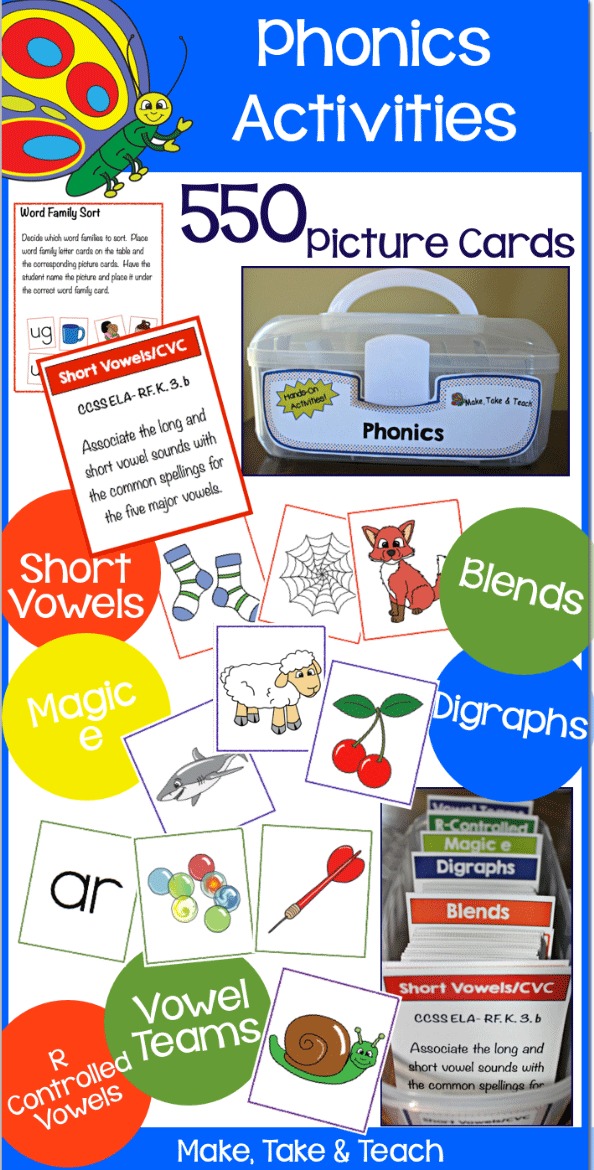
It all started with a box.  Literally– really– it all started with a box.  While walking through Michael’s Craft Store one day I came across this plastic bead tote and thought what a great container for activities.  I have several teacher friends who serve as Title One support for classrooms and they are always on the go.  When moving from classroom to classroom having materials organized is certainly a must.  Even if you’re not moving between classrooms, having your materials organized is so important as you could lose precious minutes during intervention just trying to find your materials. This box can certainly help with organizing picture cards. I decided to create two sets- a phonemic awareness box and a phonic

[Read More...]

Follow Us

Popular Posts